Healing & Recovery Peptides
Better Research means Better Recovery Chances
If tissue is injured, recovery follows a sequence that includes inflammation, new cell growth, blood vessel formation, tissue rebuilding, and remodeling. If one stage slows, recovery can be delayed, especially in tendons, ligaments, cartilage, and other tissues with limited blood flow.
For researchers, the challenge is understanding how these processes interact at the injury site rather than viewing each stage in isolation. While research models may examine individual mechanisms separately, high-quality peptides can serve as valuable tools for investigating specific pathways involved in tissue repair.
By studying each stage independently, researchers can build a clearer picture of how these processes contribute to healing and recovery.
Our research-grade peptides for healing are selected to support studies focused on tissue repair, recovery pathways, and cellular responses. With a focus on quality, consistency, and reliable characterization, they provide researchers with dependable compounds for controlled laboratory investigations. Order Now!
Study the Repair Process
For those exploring peptides for healing, “recovery” is not a single measurable outcome, a major challenge for researchers. Different biological outcomes include faster wound closure, stronger collagen structure, reduced inflammation, improved blood flow, and restored movement.
A good research model might consist of:
- Fibroblast migration and collagen deposition.
- Vascular Endothelial Signalling and Angiogenesis.
- Cytokines and immune-cell behaviour in inflammation.
- Myoblast activity and fibre regeneration.
- Tendon, ligament and tendon-to-bone integration.
- Skin closure and keratinocyte migration.
- Oxidative stress, apoptosis and cell survival.
- Tissue strength, organisation and remodelling.
Challenges Researchers Face When Studying Tissue Repair
The difficulties most researchers in this study encountered are:
- Repair is not linear: Angiogenesis, cell migration and resolution of inflammation occur on overlapping time scales, so that one compound rarely tells the whole story.
- This category is particularly vulnerable to counterfeiting: With the recent surge in interest in recovery peptides, a large portion of the market is selling underdosed or unverified vials under familiar names.
- The need for stability is always there: “Many of the most studied repair peptides are sensitive to storage and handling, and degraded product can appear as a mechanism failure when it is really a sourcing failure.”
If this sounds familiar, the first thing to troubleshoot is probably sourcing, not your protocol.
Compare Recovery Research Peptides
Researchers exploring healing research peptides should compare compounds by mechanism rather than online popularity. Take BPC-157, for example; it’s often studied for angiogenesis, cytoprotection, tendon repair, and muscle recovery.
Then there’s TB-500, a synthetic fragment linked to thymosin-beta-4 research, explored for its effects on actin regulation, cell migration, angiogenesis, and tissue remodeling.
GHK-Cu, by contrast, focuses more on dermal signaling, collagen biology, and wound healing. These differences are significant. A peptide that supports blood vessel formation might address a completely different research question than one that affects cell movement or extracellular matrix remodeling.
The effectiveness of healing peptides really hinges on the protocol in play. Researchers should take into account several important aspects:
- The specific tissue and cell types they’re focusing on.
- The injury model and the current stage of repair.
- The primary and secondary endpoints they aim to hit.
- The right positive and negative controls to use.
- How stable the peptides are and how well they work in assays.
- The need for reproducibility across various concentrations and time points.
Why Choose Vantrex Bio?
For effective peptide recovery research, clear specifications, careful storage, and detailed documentation support repeatable experiments.
Vantrex Bio offers a targeted selection for researchers interested in tissue repair, inflammation, vascular signaling, cell migration, and regeneration. Before you make a purchase, be sure to check out each product’s Certificate of Analysis, specifications, handling details, and any limitations on research use. And remember, preclinical findings should not be interpreted as evidence of human safety or clinical benefits.
Explore the best healing peptides & recovery peptides collection.
Showing all 4 results
-
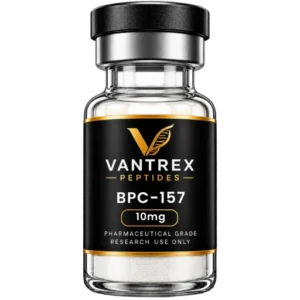
BPC-157
Price range: $ 40.00 through $ 80.00 Select options This product has multiple variants. The options may be chosen on the product page -
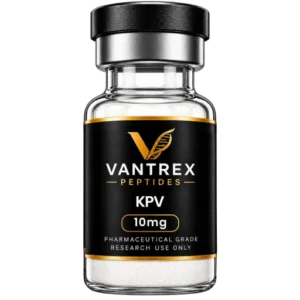
KPV
$ 70.00 Select options This product has multiple variants. The options may be chosen on the product page -
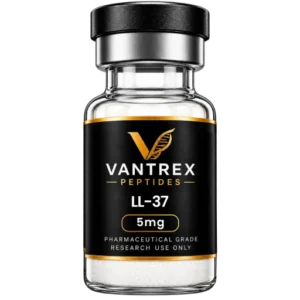
LL-37
$ 75.00 Select options This product has multiple variants. The options may be chosen on the product page -
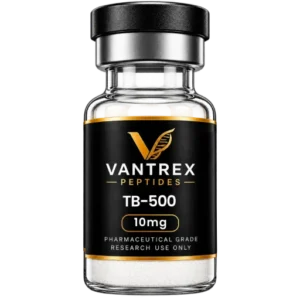
TB-500
Price range: $ 45.00 through $ 90.00 Select options This product has multiple variants. The options may be chosen on the product page